Let’s be blunt. Most flooring fails from the inside out. You see a beautiful surface, but underneath, a silent war is raging. Humidity swells planks. Dry air shrinks them. Temperature swings make them buckle and groan. For builders, developers, and property managers, this isn’t just an annoyance—it’s a direct assault on your bottom line, your timeline, and your reputation. Callbacks, replacements, and unhappy clients are the cost of doing business with floors that can’t handle the real world.
But what if the floor itself was the solution? Not just a surface that resists a spill, but a complete structural unit engineered to be impervious to the very climates that destroy others. Welcome to the era of WPC Flooring—where true waterproofing isn’t a coating; it’s the core. This isn’t an incremental improvement. It’s a fundamental redesign of what a durable floor can be. Let’s dive into why a waterproof core isn’t just a feature; it’s the foundation of climate-proof stability for any project, anywhere.
Beyond Surface Waterproof: Why Core Stability is the True Game-Changer
We’ve all been sold on “waterproof” surfaces. But a floor is a three-dimensional object. Protecting only the top is like putting a raincoat on a sponge—eventually, the core gets wet and fails.
The Silent War Beneath Your Feet: How Climate Attacks Traditional Floors
Think about traditional materials. Solid wood is a hygroscopic sponge, constantly expanding and contracting with humidity. Even engineered wood has a wood-based core that’s vulnerable. Laminate? That fiberboard core is a notorious failure point with any prolonged moisture exposure. These materials are in a constant, losing battle with their environment, leading to gaps, cupping, warping, and the dreaded musty smell of mold growing in the subfloor. The problem isn’t the spill you see; it’s the ambient moisture you don’t.
The Fatal Flaw of “Waterproof” Veneers: When Surfaces Betray the Core
Many “waterproof” floors are a clever trick. They have a waterproof wear layer on top, but the core remains vulnerable. If water gets in through the seams, a damaged edge, or even from below (think a concrete subfloor with residual moisture), that core absorbs it like a biscuit in tea. The surface might look fine, but the core swells, pushing the planks up and destroying the integrity of the entire installation. You’re left with a floor that’s waterproof on top but catastrophically weak where it counts.
Introducing the Rock: WPC’s Engineered, Waterproof Heart
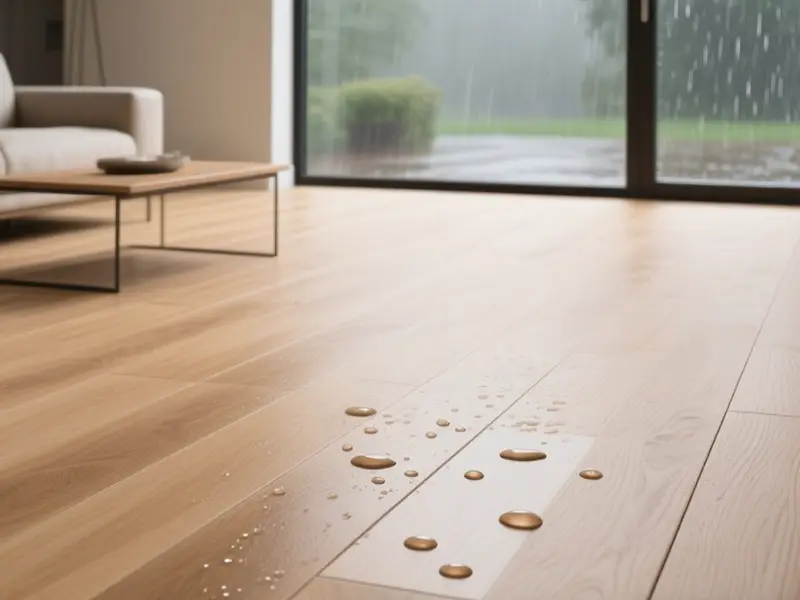
WPC—Wood Plastic Composite—changes everything. It starts with the core. This isn’t wood pulp or fiber; it’s a dense, homogenous composite of recycled wood/plastic materials and stabilizing polymers, formed under intense heat and pressure. The result? A core that is 100% inert to water. It doesn’t just resist moisture; it ignores it. This is the key to climate stable WPC flooring solutions that perform identically in a Florida beach house or an Arizona desert resort.
The Anatomy of an Unbeatable Floor: Deconstructing WPC Core Technology
To understand its power, you need to see inside. A premium WPC board is a marvel of modern engineering, built like a tactical sandwich for ultimate performance.
Layer 1: The Wear Layer – Your Scratch and Stain Shield
This is the tough, transparent urethane coating. It resists scratches from pet claws, furniture, and high heels, and provides the first line of defense against stains. Its quality determines the floor’s long-term aesthetic durability.
Layer 2: The Printed Design Layer – Endless Aesthetic Freedom
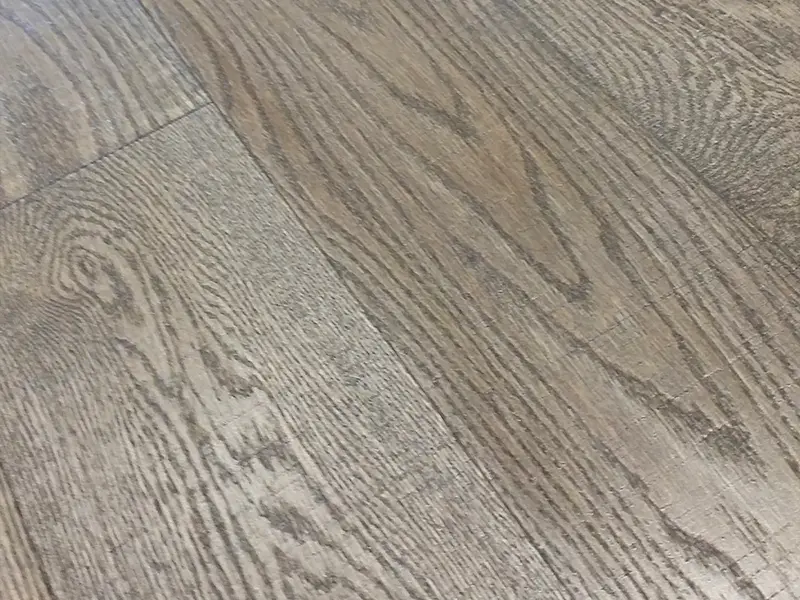
High-resolution photographic technology prints any design imaginable—oak, stone, concrete, abstract patterns—onto a durable vinyl sheet. This gives you the authentic look of any material without its inherent weaknesses.
Layer 3: The Core – The Waterproof, Climate-Immune Engine (The Star of the Show)
This is the revolutionary layer. The WPC core is a dense, solid plank. It’s waterproof, termite-proof, and provides incredible structural rigidity and underfoot comfort. Because it’s waterproof through-and-through, it’s immune to the expansion and contraction that plagues other materials. This is what delivers true waterproof core stability for any room, from basements to bathrooms to main floors.
Layer 4: The Underlayment Attached Pad – Comfort and Quiet
Often pre-attached, this foam layer provides cushioning for comfort, dampens sound for a quieter floor, and helps smooth minor subfloor imperfections. It completes the all-in-one, ready-to-install system.
Conquer Every Zone: WPC Flooring’s Climate-by-Climate Domination
Humid & Coastal Regions: Defeating Swelling, Cupping, and Mold
In places where the air feels like a wet blanket, traditional floors swell and cup. Mold finds a happy feast in organic cores. WPC’s inorganic, waterproof core doesn’t care about humidity. It won’t swell. It won’t cup. And because mold has nothing organic to eat, it simply can’t grow in the plank itself. This makes it the undisputed champion for WPC flooring for coastal homes and humid climates, protecting your project from the most aggressive moisture attacks.
Dry & Arid Climates: Resisting Shrinking, Gapping, and Cracking
The opposite problem: dry air sucks moisture out of wood-based floors, causing them to shrink, leaving unsightly and dirt-collecting gaps between planks. Again, the WPC core is impervious. It maintains its dimensional stability, so the perfect, tight seams you install on day one are the seams you’ll see years later, regardless of how low the humidity drops.
The Temperature Rollercoaster: Stable from Basement Chill to Sunroom Heat
Sunrooms, kitchens with large windows, rooms over garages—these spaces have wild temperature swings. Materials expand with heat and contract with cold. WPC’s thermal stability is exceptional. It has a very low coefficient of expansion, meaning it moves minimally with temperature changes. This stability prevents buckling and makes it safe to install in areas where other rigid floors would risk failure.
The B2B Power Play: Specifying WPC for Commercial & Multi-Family Wins
For business decisions, WPC isn’t just a product; it’s a strategic advantage that directly impacts your ROI.
The High-Traffic Endgame: Durability Meets Low Lifetime Cost
In apartments, retail spaces, or offices, floors get punished. WPC stands up to rolling chairs, constant foot traffic, and accidental spills with ease. Its durability translates directly into a lower Total Cost of Ownership (TCO). You eliminate the cyclical replacement costs of cheaper materials, reducing operational expenses and tenant turnover due to renovations.
Installation Speed = Project Profitability: The Click-Lock Advantage
Time is money. Most WPC flooring features a user-friendly click-lock system that allows for fast, floating installations over most subfloors. No messy adhesives, minimal acclimation time, and a straightforward process get your project dried-in and move-in ready faster, speeding up your entire project timeline and improving cash flow.
Your Specification Shortcut: Key B2B Keywords for WPC Mastery
To find the right product and communicate its value, speak the language. Target these B2B long-tail keywords:
- commercial grade waterproof core flooring stability
- best WPC flooring for high humidity installations
- waterproof flooring for multi-family basements and common areas
- dimensionally stable flooring for sunrooms and over concrete
- WPC flooring for coastal homes and humid climates
Using this language positions you as an expert in solving specific, high-stakes problems.
The LEBK Promise: Engineered for Absolute Stability, Backed by Science
At LEBK, we engineer floors to solve problems, not create them. Our commitment to core stability is unwavering.
Our HydroLock™ Core: Not Just Waterproof, But Dimensionally Invincible
We go beyond standard WPC with our proprietary HydroLock™ core formulation. It’s engineered for extreme dimensional stability (tested to exceed industry standards for water immersion and thermal cycling) and superior impact resistance. This isn’t just a claim; it’s the result of rigorous material science, ensuring that the stability we promise is the stability you get, year after year.
From Specification to Satisfaction: The Full-System Support for Pros
We support your project from the first spec to the final walkthrough. That means providing detailed technical data sheets, installation guidelines for challenging conditions, and robust commercial warranties that protect your investment. When you specify LEBK, you’re not just buying planks; you’re buying certainty.
Conclusion: Stop Gambling with Stability. Build on a Sure Foundation.
The choice in flooring has never been clearer. You can continue to specify materials that fight a losing battle against the environment, or you can choose a foundation of true stability. WPC flooring, with its revolutionary waterproof core, ends the cycle of climate-related failures. It delivers peace of mind, reduces lifecycle costs, and unlocks design possibilities anywhere in the home or building. For professionals who build to last, it’s the only logical choice. Choose a floor that is built from the inside out for the real world. Choose unwavering stability. Let’s choose WPC.
5 Unique FAQs for Architects, Designers, and Property Developers
1. We’re designing a high-end condo with radiant floor heating. Is WPC flooring a compatible and stable choice?
Absolutely. Premium WPC like ours is an excellent choice for over radiant heat. Its waterproof core is dimensionally stable under temperature fluctuations, and it conducts heat efficiently. The critical steps are ensuring the radiant system is operating correctly (surface temp usually not exceeding 85°F/29°C) and following the manufacturer’s specific installation guidelines for over-heated subfloors. Always request the technical data sheet for thermal resistance (R-value) and compatibility confirmation.
2. For a large commercial lobby with concrete subfloor, is a moisture barrier still required under WPC?
While the WPC core itself is waterproof, a 6-8 mil polyethylene moisture barrier (or vapor retarder) is still a mandatory best practice over concrete subfloors. Concrete is porous and constantly emits moisture vapor (MVER). The barrier protects the flooring system from potential alkali emissions and prevents moisture vapor from becoming trapped underneath, which could, in extreme cases, lead to mold growth on the subfloor. WPC protects itself; the barrier protects the overall installation.
3. What is the critical difference between WPC and SPC (Stone Plastic Composite) core flooring for a commercial project?
The core material is the difference. WPC has a wood-plastic composite core, which is slightly softer underfoot and offers better sound dampening and comfort. SPC has a limestone-plastic core, making it extremely rigid, dense, and often thinner. SPC has superior indentation resistance for very heavy, point loads. For most commercial applications where underfoot comfort and acoustics are valued (offices, multi-family), WPC is often preferred. For ultra-high-traffic retail with very heavy rolling loads, SPC may be considered. Both offer 100% waterproof cores.
4. Can LEBK WPC flooring be installed in a non-conditioned space, like a covered patio or four-season porch?
This depends heavily on the specific product’s rating. While the core is waterproof and temperature-stable, the wear layer and locking system have limits. Most WPC is designed for interior or “temperature-controlled enclosed” spaces. For a covered patio, you would need to specify a product explicitly rated for “residential indoor/outdoor” or “protected exterior” use, which will have enhanced UV and temperature cycle ratings. Never assume interior-rated product is suitable for exterior use.
5. How does the life-cycle cost of a commercial WPC floor compare to luxury vinyl tile (LVT) over a 10-year period?
While high-quality WPC and commercial LVT (also rigid core) can have similar upfront material costs, WPC often provides a lower total cost of ownership in demanding environments. Its thicker, more resilient core provides better long-term comfort and sound reduction, potentially impacting tenant satisfaction in multi-family settings. Its durability against rolling loads and impacts is exceptional. The key is matching the product specification to the traffic level. For heavy commercial, a high-grade WPC often outperforms and outlasts mid-tier LVT, reducing replacement cycles.