Let’s be brutally honest for a second. You’re not just buying planks and profiles. You’re sourcing the very foundation of your next project, the material that will stare down sun, rain, and your most demanding client. Your choice of a WPC supplier is the single most critical factor that stands between a smooth, profitable job and a logistical nightmare that eats your margins. This isn’t a transaction; it’s the bedrock of your reputation. So, how do you sift through the noise to find a partner, not just a vendor? A partner whose certification is a guarantee, not just a brochure buzzword? Strap in. We’re digging deep into why sourcing from a certified WPC supplier is the only strategic move for a business that plans to last.
Why Your WPC Supplier Choice Isn’t Just a Purchase, It’s a Partnership
Think of your ideal WPC supplier. Are they an invoice generator, or an extension of your own quality assurance team? If you’re serious about your output, it has to be the latter. Their consistency becomes your reliability. Their R&D becomes your competitive edge. Choosing them is like choosing a co-pilot for a stormy flight across the ocean. You don’t pick the cheapest one; you pick the one with the proven track record and the flawless checklist. Your project’s success depends on that same level of scrutiny.
The Hidden Costs of the “Cheapest Option” WPC Supplier
We’ve all seen that tantalizing quote, 20% lower than the rest. It’s a siren’s call. But in the world of composites, a low price is often just a high cost in disguise, paid later with interest and grey hairs. An uncertified, cost-cutting WPC supplier is a gamble you can’t afford.
Inconsistency in Density and Composition: The Silent Project Killer.
Imagine your crew on site. Everything’s moving like clockwork until… a board feels wrong. It drills differently, it sounds hollow. The color matches, but the soul of the material doesn’t. This is the ghost of poor process control—varying the plastic-to-wood ratio, using contaminated or inconsistent recycled content. The result? Weak spots, uneven weathering, and installation hell. You saved a few cents per linear foot, only to pay dollars in lost time, labor, and client trust. The true cost was never in the invoice; it was in the inconsistency.
Fading, Warping, and the Reputation Fallout.
The real test isn’t in the warehouse. It’s in the brutal, year-long bake-a-thon of a southern sun or the freeze-thaw cycles of the north. Low-tier suppliers cut corners on the expensive stuff: the high-quality UV stabilizers and coupling agents that lock out moisture. The outcome? That beautiful modern facade you installed is a patchy, cupping mess in 18 months. And guess who your client calls? Not the anonymous factory overseas. You. Your brand absorbs the blow. A single failed project can cost you a client for life. Is that “savings” worth it?
Beyond Price Tags: What a Truly Premium WPC Supplier Guarantees
So, what are you actually buying with a premium partner? You’re buying peace of mind. You’re buying a predictable outcome. You are investing in a system that eliminates nasty surprises.
Uncompromising Raw Material Sourcing.
A certified WPC supplier doesn’t buy mystery-grade plastic from the spot market. They source specific, high-purity polymers. Their wood flour comes from controlled streams with uniform particle size. It’s the difference between baking with artisanal flour and whatever’s on the discount shelf. The end result is fundamentally, structurally superior.
Precision Engineering and Batch-to-Batch Consistency.
This is where certification translates to your bottom line. Modern factories use computer-controlled recipes. The exact percentage of every component is managed by software, not a foreman’s hunch. Every melt, mix, and extrusion parameter is logged. The result? Board 1,000 is identical to board 1,000,001. This consistency lets you scale, standardize installation, and sleep at night. It transforms a commodity into a reliable engineering material. This is the level of quality assurance that makes a supplier a true partner for businesses looking to source premium WPC materials for commercial projects.
The Blueprint: Decoding the “Certified” in Certified WPC Supplier
“Certified” is a powerful word. Let’s decode what that really means for you, the buyer. These aren’t just framed certificates on a wall; they’re your insurance policy.
Material Certifications: Your Proof of Performance.
Look for marks like ASTM D7032 (the standard for WPC decking) or relevant ISO standards. This means an independent lab has beaten up their product and it passed. It’s proof of mechanical strength, fade resistance, and fire performance. It’s not a claim; it’s a verified fact.
Manufacturing Process Certifications: The Hallmark of Modern Quality.
This is the big one: ISO 9001. This certifies the *system*, not just a product sample. It means the supplier has documented, auditable processes for everything from raw material intake to final shipping. It’s a framework for continuous improvement and error prevention. It’s the system that ensures today’s perfect batch won’t be tomorrow’s problem.
Sustainability Credentials: The Green Standard That Markets Demand.
Today, quality is green. Certifications like FSC for wood fiber or detailed Environmental Product Declarations (EPDs) are no longer nice-to-haves. For your clients—architects, government bodies, eco-conscious builders—these are decision-making tools. They let you offer a product that’s not just durable, but also responsible. It’s a powerful competitive edge in a crowded market. Partnering with a supplier who prioritizes this is key for any business focused on sustainable and durable WPC building materials.
From Blueprint to Reality: Sourcing from LEBK, Your Certified Partner
Let’s make this concrete. What does it look like to partner with a supplier that lives and breathes these principles? Let’s talk about LEBK.
The LEBK Difference: A Peek into a Certified Factory Floor.
At LEBK, the ISO 9001 system is alive. Raw materials have digital passports. The extrusion lines are governed by algorithms, ensuring tolerances measured in microns, not millimeters. It’s a symphony of precision engineering, not just a manufacturing plant. This obsessive control is what makes them a trusted certified WPC supplier for global B2B partners.
Premium Material Portfolio: Engineered for Every Application.
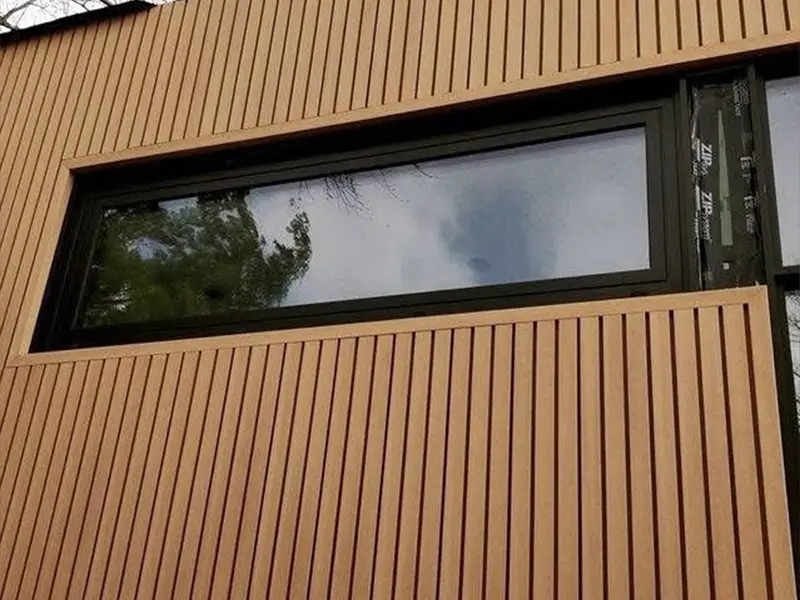
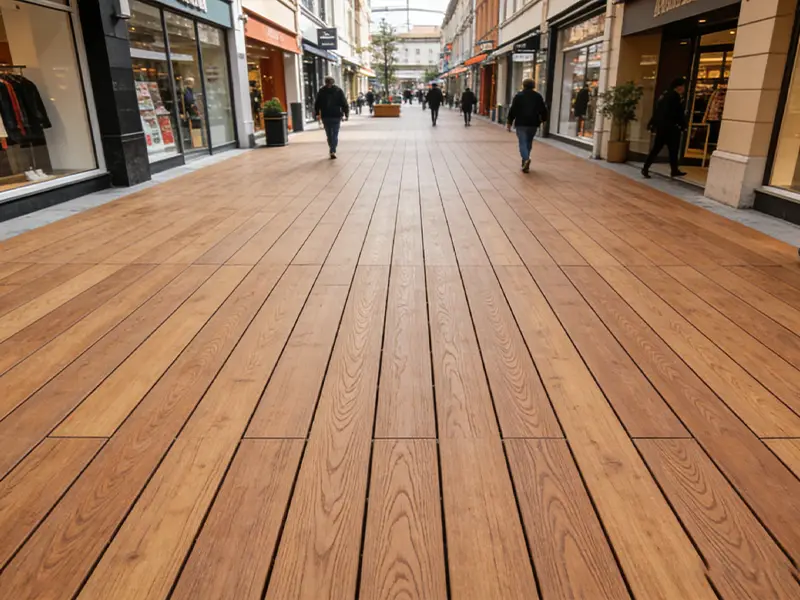
LEBK doesn’t believe in one-size-fits-all. They engineer for purpose. Need a high-density, capped board for a seaside boardwalk that withstands salt and sun? They have it. Need a specific profile for a complex rainscreen facade system? They can co-develop it. This application-specific engineering is crucial for professionals who need solutions, not just products.
Your Sourcing Journey, Simplified and Secured.
A true partnership removes friction. It means transparent communication, detailed technical data sheets for every shipment, and a supply chain robust enough to weather global disruptions. It’s the confidence that lets you focus on building your business, not managing your supplier.
Your Action Plan: Vetting Your Next WPC Supplier
Knowledge is power, but action is everything. Before you sign that next PO, do this:
- Demand the Certificates: Don’t just ask “Are you certified?” Ask to see the actual ISO 9001, ASTM, or FSC certificates. Check the validity dates and scope.
- Request Recent Test Reports: Ask for third-party lab reports (for density, flexural strength, water absorption, color fastness) for the exact product you’re buying.
- Ask for a Virtual Factory Tour: A reputable supplier has nothing to hide. A live or recorded walkthrough of their facility is incredibly revealing.
- Interrogate Their Raw Material Specs: What’s the MFI of their polymer? What mesh size is their wood flour? Vague answers are a giant red flag.
- Test Samples Like You Mean It: Don’t just look at them. Soak them. Freeze them. Leave them in the sun. Your own real-world torture test is the best due diligence.
Conclusion: Don’t Just Buy WPC, Invest in a Supply Chain Foundation.
Sourcing is a strategic function, not a clerical one. Choosing a partner like LEBK—a genuine certified WPC supplier—is a decision to build your business on a foundation of granite, not sand. It’s an investment that eliminates catastrophic risk, protects your hard-earned reputation, and delivers finished projects that stand as testimonials to your quality for decades. You shift from hoping the material holds up to *knowing* it will. In today’s market, that certainty isn’t a cost; it’s your ultimate competitive weapon. Stop shopping for prices. Start vetting for partners.
Frequently Asked Questions (FAQs)
Q: We mostly do residential decks. Do we really need a supplier with all these high-end certifications?
A: Absolutely, and here’s why: a homeowner’s investment is deeply personal. A failing deck doesn’t just mean a warranty callback; it can destroy your online reputation and local referrals. Certifications are your objective, third-party proof of quality. They protect you as much as they assure your client, turning subjective claims into undeniable facts.
Q: How can I be sure the certificates a supplier shows me are legitimate and not just fabricated?
A: Great question. Always cross-check. Reputable certification bodies (like SGS, BV, TÜV) maintain online directories. Take the certificate number from the document and verify it on the certifier’s official website. A legitimate supplier will encourage this transparency.
Q: Does paying more for a certified supplier automatically mean we get better WPC?
A: Not automatically, but it massively increases the odds. Think of it this way: the higher price reflects the cost of the systems (ISO 9001), testing (ASTM certs), and premium raw materials that *prevent* problems. Your due diligence (samples, reports) confirms you’re paying for that prevention, not just a brand name. A low price almost always means corners were cut somewhere.
Q: Can a certified supplier handle smaller, custom color runs, or are they only for massive, standard orders?
A: This is often a key advantage. Advanced, certified suppliers use computer-controlled color dosing systems, allowing for precise, small-batch custom colors with excellent consistency. Discuss your Minimum Order Quantity (MOQ) needs upfront. A good partner will work with you, while a basic factory may only offer stock colors in container loads.
Q: What’s the one question I should ask a potential supplier that most buyers forget?
A: Ask this: “Walk me through your process if a sample from a production batch fails one of your internal quality control checks. What happens next?” Their answer reveals everything. Do they have a formal “Non-Conformance” procedure? Do they stop the line, quarantine material, and perform a root-cause analysis? A vague answer means they likely don’t have a real quality *system*, just final inspection.